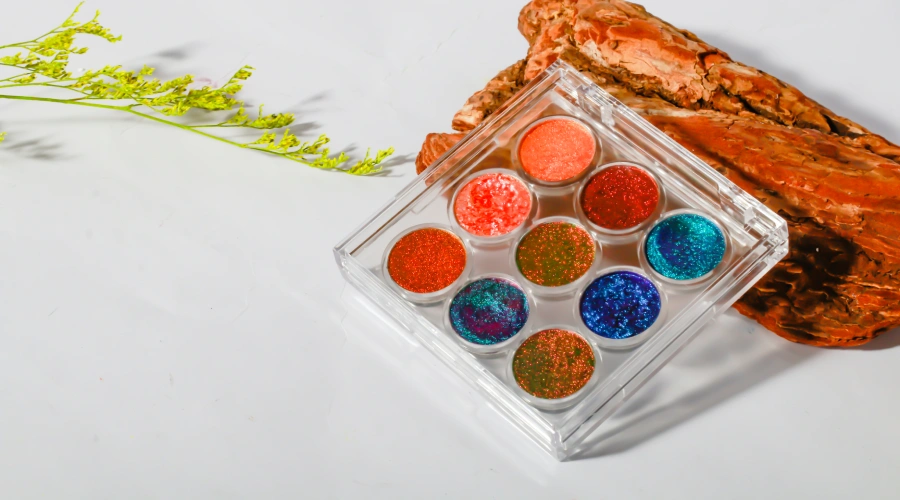
Duochrome pigments create a visual effect that changes color depending on the angle of light. In cosmetics, materials like duochrome eyeshadow and pearlescent powders illustrate this effect. The science behind these pigments blends physics and chemistry, producing vibrant, angle-dependent colors.
These pigments stand out from standard cosmetic powders because their optical properties depend on how light interacts with the pigment’s structure. Observing duochrome pigments closely reveals subtle shifts in hue, which are not present in regular single-color formulations.
What Makes Duochrome Pigments Unique
Duochrome pigments are unique because they produce two or more apparent colors from the same particle. This effect is often due to thin-film interference or the way light refracts through mica or synthetic particles (Sharma & Bhushan, 2010).
The unique shift is angle-dependent, meaning the color changes as the surface moves relative to a light source. This characteristic is what gives duochrome eyeshadow its dynamic and visually intriguing effect. Unlike standard pigments, these particles interact with light to produce complex visual results.
Common Uses in Makeup and Cosmetics
In makeup, duochrome pigments are commonly used in eyeshadows, highlighters, and lip products. Their optical shift can make eyes appear larger or create a dimensional effect on lips and cheeks.
Cosmetic chemists often blend duochrome pigments with binders and base powders to control opacity, shimmer, and spreadability. When applied, the angle of light changes how the color is perceived, which is why duochrome eyeshadow looks different under indoor light versus sunlight.
The Science Behind Duochrome Pigments
The science behind duochrome eyeshadow combines optical physics and material engineering. By studying light behavior on micro-structured surfaces, researchers can predict and manipulate the colors that appear to the observer.
Light Interference and Reflection Explained
Duochrome pigments use light interference to create color shifts. When light hits the surface of mica or synthetic particles, some is reflected while some penetrates the layers. These overlapping waves interfere constructively or destructively, enhancing certain wavelengths and canceling others (Hecht, 2017).
This interference effect is why duochrome eyeshadow appears to change from purple to green or gold to pink, depending on the angle. Reflection from multiple layers amplifies the shift, producing a multidimensional look without mixing pigments chemically.
Thin-Film Effects and Structural Color
Thin-film effects occur when a semi-transparent layer, like coated mica, splits incoming light into multiple paths. The difference in path lengths causes some colors to be amplified and others to diminish. This creates the illusion of changing hues without adding extra dyes.
Structural color also contributes: microscopic shapes and thicknesses of particles determine which wavelengths are reflected. Duochrome pigments rely on this principle to achieve vibrant color shifts. Cosmetic scientists adjust particle size and coating thickness to fine-tune the visual outcome in eyeshadows, highlighters, and lip products.
Types of Duochrome Pigments
Duochrome pigments can be divided into natural and synthetic types, each with distinct optical properties. Cosmetic products, including duochrome eyeshadow, often use either mica-based or synthetic pearlescent pigments depending on desired shimmer, color shift, and stability.
Mica-Based Duochromes
Mica-based duochromes are natural minerals coated with thin layers of metal oxides. These coatings create interference effects that produce color shifts, such as purple-to-green or gold-to-pink transitions in duochrome eyeshadow.
Particle size and coating thickness are carefully controlled. Larger flakes tend to produce more dramatic shimmer, while smaller particles give a smoother, subtle color change. Mica-based pigments are popular because they combine safety, lightweight feel, and a naturally luminous effect.
Synthetic Pearlescent Pigments
Synthetic pearlescent pigments are engineered materials, often composed of bismuth oxychloride, titanium dioxide, or coated polymers. They mimic the interference effect seen in mica but allow precise control over color, angle shift, and reflectivity.
These pigments are used when consistent color, long-lasting performance, or unusual shades are desired. In duochrome eyeshadow, synthetic pearlescent pigments can achieve bold or rare color shifts that are difficult to produce with natural mica alone.
How Duochrome Pigments Create Color Shifts
Duochrome pigments produce shifting colors through their unique interaction with light. In products like duochrome eyeshadow, the color seen changes depending on viewing angle, lighting, and the structure of the pigment particles themselves.
These shifts are optical rather than chemical. The effect is dynamic, allowing a single pigment to appear as multiple hues, which is why duochrome cosmetics are visually striking and versatile.
Angle-Dependent Color Changes
The primary reason duochrome pigments change color is angle-dependent light reflection and interference. As the surface or viewer moves, different wavelengths of light are enhanced or diminished, producing distinct color shifts (Sharma & Bhushan, 2010).
For example, a duochrome eyeshadow may appear deep purple straight on but shift to green or gold when tilted. This phenomenon occurs naturally in mica-based or synthetic pearlescent pigments and is enhanced by coating thickness and layer structure.
>> Is It Better to Apply Eyeshadow with a Brush or Fingers?
Role of Particle Size and Shape
Particle size and shape influence the intensity and range of color shifts. Larger, flatter flakes tend to reflect more light and produce pronounced shimmer, while smaller or irregular particles create subtle transitions.
Coating geometry also matters: even tiny differences in thickness or surface curvature can change which wavelengths interfere constructively. Cosmetic chemists manipulate these factors to control the exact hue shift and optical effect in eyeshadows, highlighters, and lip products.
Factors Affecting Duochrome Appearance
The visual impact of duochrome pigments depends on multiple factors beyond the pigment itself. In cosmetics like duochrome eyeshadow, base color, layering, texture, and medium all influence how the color shift appears to the eye.
Base Color and Pigment Layering
The underlying base color can enhance or mute the duochrome effect. Darker bases often make the shift more pronounced, while lighter bases may soften the transition. Layering multiple pigments can also modify the visual effect, creating complex color blends without altering the pigment chemically.
Careful layering allows cosmetic artists to customize the appearance of duochrome eyeshadow. Each layer affects light reflection and interference, emphasizing certain hues over others and producing a richer, multidimensional look.
Finish, Texture, and Medium Influence
The finish of the product—matte, satin, or shimmer—affects how light interacts with duochrome pigments. Smooth, finely milled textures often create more even color shifts, while coarser particles can add sparkle and highlight specific angles.
The medium, such as cream, powder, or liquid, also matters. Cream formulations can intensify color and enhance adhesion, whereas powders may appear softer or more diffused.
Application Techniques in Makeup
Applying duochrome pigments effectively requires understanding how light and layering interact. Products like duochrome eyeshadow and lip pigments perform differently depending on technique, pressure, and blending, which can dramatically influence the visible color shift.
Careful application ensures that the optical effects are highlighted while maintaining a smooth, even finish. Cosmetic artists often adjust tools and methods to suit both cream and powder formulations.
Eyeshadow and Lip Products
Duochrome eyeshadow can be applied with brushes, fingers, or sponge applicators. Light pressure preserves the layered structure of the pigment, enhancing the color shift. For lips, duochrome pigments are usually mixed with balms or glosses to ensure smooth coverage and flexibility.
The choice of base color also matters. A neutral or slightly darker base can intensify the shift on eyes or lips, while lighter bases may create a softer, iridescent effect. Proper preparation of the skin ensures the pigment adheres evenly and reflects light optimally.
Blending and Layering for Maximum Effect
Layering duochrome pigments allows for more complex shifts and richer color. Applying a thin base coat and then building up the pigment gradually can maximize the angle-dependent effect.
Blending edges carefully avoids muddying the colors. Some cosmetic artists layer complementary shades or add translucent shimmer on top to amplify light reflection. These techniques allow duochrome eyeshadow or lip products to display vibrant, multidimensional effects under various lighting conditions.
Safety and Stability Considerations
Duochrome pigments are generally safe when formulated with skin-friendly ingredients. In cosmetics like duochrome eyeshadow and lip products, careful selection of pigments and binders ensures minimal irritation while maintaining the desired optical effect.
Skin-Safe Pigments and Cosmetic Regulations
Pigments used in duochrome makeup are regulated to prevent toxicity or allergic reactions. In the U.S., the FDA oversees color additives, ensuring that mica, titanium dioxide, and pearlescent coatings meet safety standards for eye and lip products (FDA, 2023).
Formulators often choose inert or encapsulated pigments to reduce reactivity. Even synthetic pearlescent pigments must pass safety tests for irritation, sensitization, and ingestion risk, making them suitable for daily cosmetic use.
Lightfastness and Longevity
Duochrome pigments can fade or shift subtly over time if exposed to UV light or oxidation. Lightfastness tests measure how well the color maintains its optical effect under continuous exposure.
Cosmetic chemists optimize formulations by adjusting particle coatings, binders, and base colors to ensure long-lasting vibrancy. Proper packaging and storage also help preserve the angle-dependent color shifts in duochrome eyeshadow, highlighters, and lip products.
Future Trends in Duochrome Cosmetics
Duochrome pigments continue to evolve as cosmetic science advances. Researchers and formulators are exploring ways to create more vibrant, angle-shifting effects while improving stability, versatility, and environmental impact.
The next generation of duochrome eyeshadow and lip products aims to balance visual performance with safety and sustainability, responding to both consumer demand and regulatory guidance.
Innovations in Pigment Technology
New pigment technologies focus on optimizing particle size, coating precision, and light interference to achieve stronger or more unusual color shifts. Some innovations involve hybrid mica-synthetic particles that combine natural shimmer with enhanced durability.
Advances also target easier blending, better adhesion, and compatibility with various product formats, including creams, powders, and gels. These improvements allow duochrome pigments to perform consistently across eyeshadow, highlighter, and lip products.
Sustainability and Alternative Materials
Sustainable approaches are gaining attention in duochrome pigment production. Researchers are developing plant-based or biodegradable coatings to replace metal oxides while maintaining the same optical effects.
Alternative materials also focus on reducing environmental impact from mining mica or synthesizing synthetic pigments. By combining eco-conscious ingredients with advanced optical science, the cosmetic industry can offer visually striking, safe, and sustainable duochrome products for the future.
Conclusion
Duochrome pigments rely on light interference, particle size, and coating structure to create shifting colors. Their unique properties make eyeshadow, highlighters, and lip products visually dynamic, blending science with artistry in modern cosmetics.
Frequently asked questions
Can duochrome eyeshadow be layered with other eyeshadows?
Yes, duochrome eyeshadow can be layered over matte or shimmer shades to create depth. Layering can enhance color shifts, but it’s important to apply lightly to avoid muddying the unique angle-dependent effect.
Does duochrome eyeshadow look the same under all lighting conditions?
No, lighting significantly affects duochrome eyeshadow appearance. Natural sunlight, indoor lighting, or camera flash can emphasize different hues due to the pigments’ light-reflective properties.
How do I make duochrome eyeshadow more vibrant?
Using a neutral or slightly darker base can intensify duochrome eyeshadow. Applying a primer or wetting the brush can also boost pigment payoff and make the angle-dependent color shifts more noticeable.
Are duochrome eyeshadows safe for sensitive eyes?
Most duochrome eyeshadows are safe for sensitive eyes if formulated with cosmetic-grade mica and approved pigments. Always check for irritation, avoid expired products, and follow cosmetic safety guidelines.
Can duochrome eyeshadow be used for professional makeup photography?
Yes, duochrome eyeshadow is popular in professional photography because its color shift adds dimension and depth. Photographers often adjust lighting angles to highlight the pigment’s unique reflective and iridescent qualities.


