
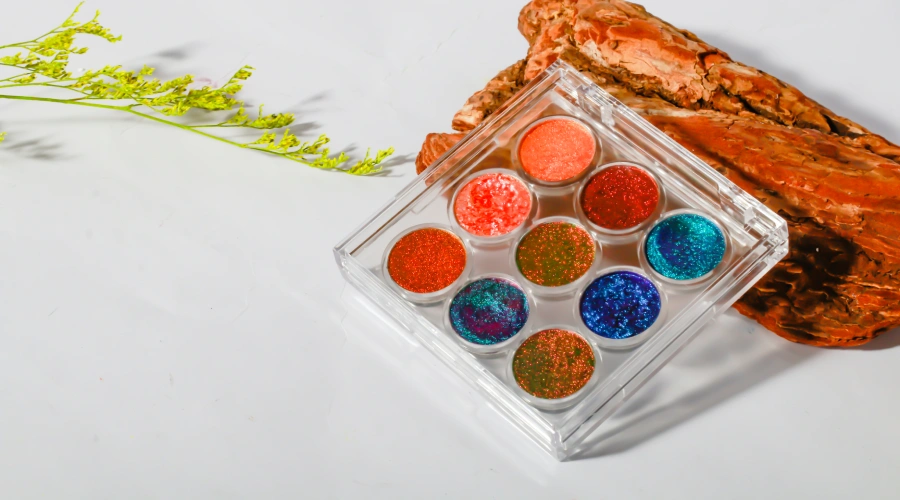
A custom eyeshadow palette is not simply a collection of attractive colors. It is a product system in which shade roles, finishes, formulas, pans, compact structure, decoration, application, price position, and production quantities must work together.
For a beauty brand, retailer, or distributor, the first task is to define what the palette should achieve in the assortment. That decision should guide the shade count and component plan instead of starting with a generic trend board.
Define the palette’s commercial role
Is it a core neutral palette, seasonal story, professional kit, travel format, statement collection, or retailer-exclusive assortment? Identify the target customer, sales channel, market, retail position, intended looks, and relationship to existing products.
A focused palette often has a stronger role than one that attempts to cover every color and finish. Write down the looks or product outcomes it must support and the shades needed to create them.
Build a shade architecture, not a random color list
Assign every pan a purpose. Depending on the concept, roles can include base, transition, depth, liner, highlight, lid color, topper, or accent. Review the range for duplicated shades, missing depth, finish balance, and whether the planned looks remain distinct.
Record shade family, depth, undertone, saturation, opacity, payoff, and finish direction. Use the color-cosmetics shade brief and approval guide to make references and feedback more reproducible.
Plan finishes around use and manufacturability
Matte, satin, shimmer, metallic, duochrome, topper, and other effects can create a useful mix, but each may behave differently in formulation, pressing, pickup, fallout, and visual evaluation. Do not assume one base or pressing condition will work across the whole palette.
Ask whether each finish supports the palette role. A professional neutral range may need dependable transitions and depth shades. An effect palette may prioritize reflection and layering. The answer comes from the brief, not a universal finish ratio.
Connect pigment direction to market requirements
Color selection is both aesthetic and technical. The same visual reference may require different colorant choices for different product areas or markets. Confirm intended use, target markets, and any eye-area restrictions with qualified regulatory and technical parties.
For the United States, the FDA color-additives fact sheet explains that color additives have specified uses, restrictions, and labeling requirements, and that some require batch certification. A visual shade approval is not a regulatory approval.
Evaluate the formula system shade by shade
Review pickup, payoff, blendability, adhesion, fallout, surface appearance, glazing, and pan strength. Deep pigments, high effect-material loads, and different textures can change powder flow and compaction behavior.
The guide to pressed powder formulation and pan performance explains why binder, processing, pressing, pan, and applicator should be assessed as a system.
Choose pan count, dimensions, and layout together
Pan shape and size influence fill weight, brush access, pressing, breakage, visual hierarchy, and palette dimensions. Large hero pans can emphasize high-use shades, while small pans allow more variety but may make brush pickup harder.
Confirm pan material, dimensions, depth, insert fit, spacing, retention, and assembly method. Review whether adjacent shades can contaminate one another during use and whether effect finishes need more separation.
Select the compact before final artwork
Decide between stock, modified-stock, and custom structures. Consider mirror, applicator, closure, hinge, insert, window, refill concept, decoration area, secondary carton, and shipping protection.
Use the powder makeup compact development guide to connect pan and package decisions. Artwork should not be finalized until the real dieline and decoration area are controlled.
Review the assortment as a whole
| Review area | Buyer question |
|---|---|
| Color story | Do the shades create the intended looks without unnecessary duplication? |
| Finish balance | Does every finish serve the palette role and target customer? |
| Performance | Are pickup, payoff, blending, fallout, and wear direction coherent across shades? |
| Physical system | Do formula, pans, insert, closure, mirror, and applicator work together? |
| Commercial plan | Do component choices, shade count, order scope, and retail position align? |
Create a sample matrix
Track each shade by code, formula version, finish, reference, pan, compact version, review date, decision, and open items. Review shades both individually and inside the final assortment. A shade can perform well alone but feel redundant or visually disconnected inside the palette.
Use the pre-production sample approval checklist to separate formula, shade, component, artwork, and production decisions.
Information to send a manufacturer
- target buyer, market, channel, and price position;
- palette role and intended looks;
- pan count, dimensions, layout, and compact status;
- shade and finish matrix with references;
- formula, payoff, fallout, and sensory direction;
- decoration, artwork, carton, and applicator requirements;
- expected quantity and launch constraints;
- sample reviewers and approval method.
AKIACO’s shared confirmed default MOQ is usually 3,000 pieces; exact requirements depend on the specific palette, components, shades, and order. When your palette architecture and packaging status are clear, contact AKIACO to discuss the development and sampling route.
Frequently asked questions
What should a custom eyeshadow palette brief include?
Include the target buyer, market, pan count, shade roles, finishes, formula direction, payoff, compact, decoration, quantity, and approval method.
How many finishes should an eyeshadow palette contain?
There is no universal number. Choose finishes that support the intended looks, price position, formula system, and target customer.
Can every shade use the same eyeshadow base?
Not automatically. Pigment and effect-material differences can change payoff, texture, pressing, and stability, so shades need individual evaluation.
When should the compact be selected?
Select or shortlist the compact early enough to align pan dimensions, layout, applicator, decoration, filling, assembly, and sample approval.
What should brands approve before bulk production?
Approve the identified formula and shade versions, pan behavior, compact, artwork, filled presentation, open technical items, and production reference.