
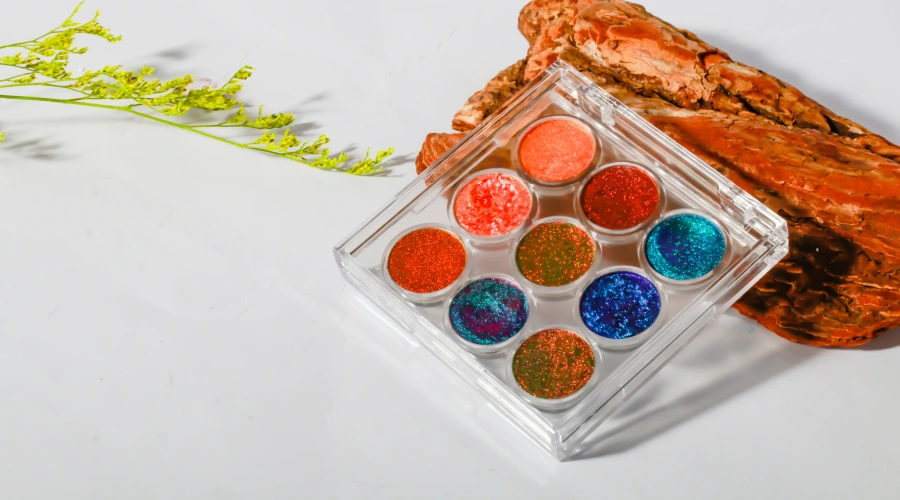
Duochrome cosmetics appear to change color as the lighting or viewing angle changes. For a beauty brand, that effect is not defined by an evocative shade name alone. It must be translated into an approved visual reference, a compatible formula and process, a repeatable evaluation method, and packaging that presents the effect clearly.
What causes a duochrome color shift?
Many duochrome effects use layered effect materials. Light reflecting from different layers can reinforce or reduce particular wavelengths. As the angle changes, the optical path changes, and the viewer may see a transition between two dominant colors.
This behavior is commonly described through thin-film interference. The finished cosmetic result still depends on the complete pigment system and formula, not only the effect material viewed in isolation.
The base color changes the visible effect
A transparent or pale base may produce a subtle shift, while a dark or contrasting base can make the transition look stronger. Background shade, opacity, effect-pigment concentration, particle distribution, binder, and other colorants all influence what the buyer sees.
Define both parts of the target: the color seen most directly and the color revealed at an angle. A reference should also state the substrate or base on which the effect is evaluated.
Format and process matter
Duochrome effects can be considered for pressed eyeshadow, loose powder, highlighter, and other suitable formats. Each format changes how the particles orient, adhere, spread, and reflect light. Aggressive processing or an unsuitable binder system may reduce the desired visual effect or change application behavior.
For pressed products, review the pressed powder formulation and pan performance guide. Formula, particle system, processing, compaction, pan, and package should be assessed as one system.
Describe the effect with observable criteria
A useful development brief goes beyond “strong duochrome.” Record:
- the face-on color and shifted color;
- the reference sample or swatch;
- the intended base shade and opacity;
- the application method and amount;
- the light sources and viewing angles;
- the desired finish, texture, adhesion, and payoff;
- the intended package and assortment role.
The cosmetic shade brief guide provides a structure for turning visual language into an approval reference.
Evaluate samples under more than one condition
A shift that looks dramatic under one directional light may look quieter under diffuse retail or office lighting. Review the sample under agreed daylight-equivalent, warm, cool, and directional conditions where relevant. Tilt both the sample and viewing angle, and compare the same application weight and substrate.
Photographs and video can support records, but camera processing, exposure, screen calibration, and compression may alter the effect. Keep a controlled physical approval reference when possible.
Packaging influences presentation
Pan depth, compact color, window clarity, insert geometry, and surrounding shades can affect how the color shift is perceived. The package must also protect the product and allow the intended pickup method.
Use the powder makeup compact development guide to check pan, insert, clearance, closure, applicator, and filled-product compatibility.
Regulatory suitability is a separate check
An attractive effect does not by itself establish that every color additive is permitted for every market or area of use. The final formula, intended use, labeling, and destination market require project-specific review. The US FDA explains that color additives must be approved for their intended use in the United States in its color additives and cosmetics fact sheet.
Approve the complete product, not an isolated pigment
Before bulk production, approve the formula, shade and shift, application method, texture, payoff, pan or vessel, packaging, artwork, testing plan, and open items. A raw-material photograph cannot replace a finished-formula sample.
Use the makeup sample approval checklist to document the decision. When the product brief is ready, contact AKIACO to discuss development and manufacturing.
Frequently asked questions
What creates the color shift in a duochrome pigment?
Layered effect materials reflect and interfere with light differently as the viewing or lighting angle changes.
Does the base color affect a duochrome result?
Yes. The formula base, background shade, pigment concentration, and other colorants can change the visible shift and contrast.
Can duochrome pigments be used in pressed and loose products?
Potentially, but each format needs a compatible formula and process that support adhesion, payoff, appearance, and stability.
How should brands evaluate duochrome samples?
Review samples under agreed light sources and at several angles, then document the base color, shift, payoff, texture, and package presentation.
What should a brand approve before production?
Approve the formula, shade and shift reference, application method, package, artwork, test plan, and other project specifications.