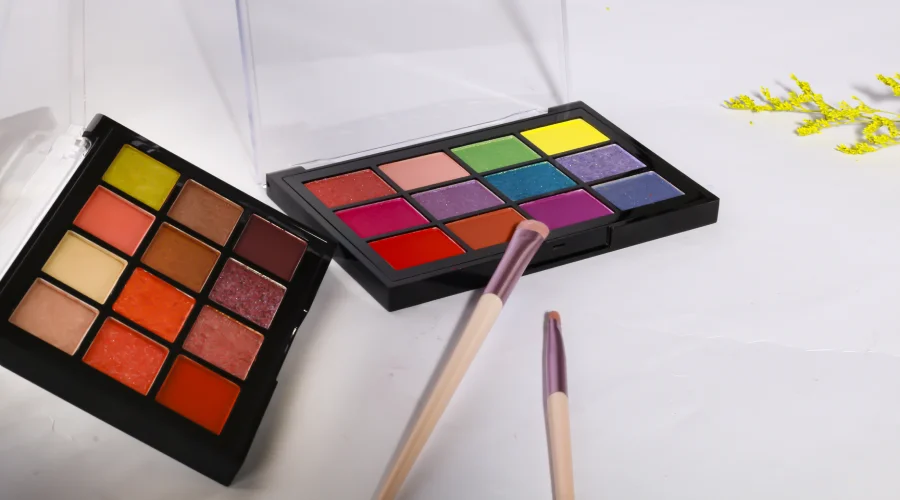
Eyeshadow isn’t just about color—it’s about texture, blendability, and how long it lasts. Powder and baked eyeshadows have different formulas, which change how they perform on the skin. To choose the right one, it helps to understand their composition and manufacturing process.
What Is Powder Eyeshadow?
Powder eyeshadow is the most common type, found in nearly every makeup collection. It comes in individual pans or palettes, offering a wide range of shades and finishes. These eyeshadows are finely milled and pressed into a compact form, making them easy to apply and layer.
Composition and Manufacturing Process
Powder eyeshadows start as a blend of pigments, fillers, and binders.
- Talc and mica are common base ingredients, providing a smooth texture and light-reflecting properties.
- Binders, such as silicone or zinc stearate, help the powder adhere to the skin without falling off.
The final step is pressing.
Manufacturers use different levels of pressure to control the texture. Softer pressing allows for better blendability, while firmer pressing increases longevity but may reduce color payoff. Some brands add emollients to create a creamy texture that still behaves like a powder.
Types of Powder Eyeshadow
Matte
Matte eyeshadows have no shimmer or shine, making them ideal for creating depth and dimension. They work well for blending and defining the crease.
Shimmer and Satin
Shimmer eyeshadows contain tiny reflective particles, adding a subtle glow. Satin formulas are a balance between matte and shimmer, offering a soft sheen without looking too sparkly.
Metallic and Foiled
Metallic eyeshadows have intense shine, often with a wet-looking finish. Foiled shadows contain higher amounts of pigment and binding agents, creating a rich, reflective effect that mimics metal.
Glitter Eyeshadow
Glitter eyeshadows can be pressed or loose. Pressed glitters are suspended in a binding agent, making them easier to apply without fallout. Loose glitter requires a separate adhesive to stay in place.
Benefits of Powder Eyeshadow
Powder eyeshadow is known for its versatility. It blends easily, making it beginner-friendly.
With a wide variety of finishes, it suits everything from subtle daytime looks to dramatic evening styles. The pressed formula allows for layering, so users can build intensity without making the color look heavy or uneven.
What Is Baked Eyeshadow?
Baked eyeshadow has a distinct formulation and production process that sets it apart from traditional pressed powders. Known for its smooth application and versatile use, baked eyeshadow is a favorite among makeup artists and beauty enthusiasts.
How Baked Eyeshadow Is Made
Unlike pressed eyeshadows, which start as loose powders and are compacted into pans, baked eyeshadow begins as a liquid or cream.
The mixture is poured onto terracotta tiles and then slowly baked at low temperatures. This process removes excess moisture while preserving pigment intensity.
The result is a lightweight, dome-shaped product with a marbled or swirled texture. This unique composition enhances color vibrancy and allows for both sheer and bold applications.
Since the baking process binds the pigments without requiring heavy binders or fillers, baked eyeshadows often feel softer and blend more seamlessly on the skin.
Key Features of Baked Eyeshadow
- Lightweight, finely milled texture: The baking process results in a smooth, blendable consistency that minimizes chalkiness.
- Pearlized and shimmering pigments: Many baked formulas have a luminous, reflective quality that enhances dimension on the eyelid.
- Marbled or swirled designs: Some baked eyeshadows mix multiple shades in a single pan, allowing for easy color layering.
- Versatile application: Can be used dry for a soft wash of color or wet for intensified pigmentation and a metallic effect.
Advantages of Baked Eyeshadow
- Longer wear time: The baked formula reduces fallout, keeping the eyeshadow in place throughout the day.
- More vibrant finish: The refined pigment concentration enhances brightness and luminosity.
- Multi-use potential: Works well as an eyeshadow, highlighter, or even blush depending on the shade.
- Blends easily: The smooth texture makes it easier to build and blend without patchiness.
Powder vs. Baked Eyeshadow: Key Differences
Selecting between powder and baked eyeshadow comes down to texture, application method, and desired look. Each has distinct properties that affect performance on different skin types and under various conditions.
| Feature | Powder Eyeshadow | Baked Eyeshadow |
|---|---|---|
| Texture | Soft, finely pressed | Smooth, lightweight |
| Application | Easy to blend but prone to fallout | Blends seamlessly with minimal fallout |
| Pigmentation | Varies; matte shades may need layering | More intense; can be applied wet for extra vibrancy |
| Wear Time | May fade or crease without primer | Longer-lasting, adheres well to skin |
| Best for Skin Type | Oily lids (absorbs oil) | Dry or mature skin (prevents settling into lines) |
How to Apply Each Type for Best Results
Both powder and baked eyeshadows offer unique ways to create stunning looks. However, mastering how to apply them correctly can make all the difference in achieving a smooth, vibrant finish.
Best Tools for Application
When it comes to applying eyeshadow, the tool you use is just as important as the formula. The most common tools include brushes, fingers, and sponge applicators.
- A soft, fluffy brush is ideal for applying eyeshadow across the lid, while a smaller, angled brush helps define the crease. For baked eyeshadow, however, a firm, flat brush works better to pick up the product’s dense texture.
- Fingers can be a great alternative for both formulas, especially when you want a more intense color payoff. Simply press the eyeshadow onto the lid for maximum pigmentation.
- Sponge applicators are another option, best used for packing eyeshadow onto the eyelid.
If you’re using baked eyeshadow, wetting the brush with a little water can intensify the color. A damp brush helps pick up the baked formula, giving it a creamier finish that works great for dramatic looks.
>> How to Choose an Eyeshadow Palette That Fits Makeup Routine
Tips for Maximizing Pigmentation and Blendability
Both powder and baked eyeshadows have their own quirks when it comes to blending and achieving full pigmentation.
For baked eyeshadow, the key to maximizing intensity is dampening your brush before application. This technique helps the pigment adhere to the brush more effectively, which results in a bolder, more vibrant look. If you prefer a subtler effect, apply it dry for a softer, more diffused finish.
When working with powder eyeshadow, you might find the formula can sometimes look patchy or uneven. To prevent this, start by tapping off any excess powder from the brush before applying it to your eyelids. This ensures you don’t overload your lids with products.
Another trick is to layer the powder eyeshadow in thin layers, building up the intensity gradually for smoother blending.
How to Prevent Creasing and Fallout
Eyeshadow can sometimes crease or create fallout, especially when it’s not applied properly.
- Eyeshadow primer is your first line of defense against these common issues. Primers create a smooth base for the eyeshadow to stick to and help prevent creasing throughout the day.
To reduce fallout, use a technique called baking—applying a light dusting of setting powder underneath your eyes before applying eyeshadow. This catches any excess product that may fall from the brush.
- Once your eyeshadow is applied, simply dust away the powder for a clean, flawless look.
For long-lasting wear, it’s important to layer your eyeshadow. Start with a thin layer of primer, followed by a light dusting of translucent powder over the primer.
- Apply your eyeshadow in layers, and finish with a setting spray to lock everything in place.
This technique helps the color stay vibrant and prevents it from fading or smudging.
>> Step-by-Step Guide: How to Perfectly Apply Liquid Eyeshadow
Common Mistakes When Using Powder and Baked Eyeshadows
Choosing the right eyeshadow formula and applying it properly can sometimes be tricky. Some common mistakes can prevent you from getting the best results from both powder and baked eyeshadows.
- One major mistake is picking the wrong formula for your desired finish.
For instance, powder eyeshadow is often more suitable for soft, blended looks, while baked eyeshadow excels in providing bold, intense color.
If you’re aiming for a natural, diffused finish but choose a baked formula, you might end up with too much intensity. On the other hand, if you want a vibrant, metallic effect but opt for powder eyeshadow, it might fall flat.
- Another mistake is over-blending vs. under-blending.
Blending is crucial for a smooth, professional finish, but it’s easy to go too far. Over-blending can cause powder eyeshadow to fade, while under-blending may leave harsh lines. Striking the right balance is key.
- Applying baked eyeshadow dry when you need high intensity is another common error.
If you want that extra pop, using a damp brush will help. A dry application may not deliver the color payoff you’re looking for, especially with baked formulas.
- Finally, using too much product can lead to cakiness.
Both powder and baked eyeshadows can become heavy and uneven when over-applied. Instead of piling on layers, try building the product gradually for a smoother, more controlled finish.
Should You Choose Powder or Baked Eyeshadow?
The choice between powder and baked eyeshadow depends on your preferences and the type of look you’re going for.
- Powder eyeshadow is ideal for people who prefer soft, blended looks.
It’s easier to work with and more forgiving if you’re a beginner. If you’re looking for a more natural finish, powder eyeshadows will be your best bet.
- On the other hand, baked eyeshadows tend to work better for those who want intense, high-impact colors.
They’re perfect for creating bold, dramatic looks that demand attention. If you’re preparing for a night out or a special event, baked formulas give you that extra pop.
In some cases, mixing both types can create a custom look. For example, use powder eyeshadow to build a soft base, then apply a damp baked eyeshadow on top for added intensity and dimension.
Conclusion
To recap, powder and baked eyeshadows offer different benefits and finishes. Powder is great for softer looks and blending, while baked formulas are perfect for intense color and metallic finishes.
Understanding your desired look and applying the right techniques will help you achieve the perfect eyeshadow result.
Frequently asked questions
Can I use powder eyeshadow wet?
Yes, you can use powdered eyeshadow wet for a more intense finish. Simply dampen your brush with a little water or setting spray, then dip it into the powder. This technique helps the pigment adhere better and gives a more vibrant, bold color. It can also give a more metallic or foiled look, making it ideal for special occasions. Just be cautious not to over-wet your brush, as too much moisture can affect the eyeshadow’s texture.
Is baked eyeshadow better for mature skin?
Baked eyeshadow can work well for mature skin due to its smoother, more refined texture. Unlike powder formulas, which can sometimes settle into fine lines, baked eyeshadow often has a creamier finish when applied with a damp brush. This can help avoid emphasizing wrinkles. However, it's still important to apply it carefully and blend well to achieve a natural look. Always use an eyeshadow primer to ensure long-lasting wear.
Can baked eyeshadow be used for a natural look?
While baked eyeshadows are known for their intensity, they can also be used for a more natural look. By applying the product lightly with a dry brush, you can create a subtle wash of color. To keep the look soft, blend the eyeshadow into the crease and along the lash line. A good trick is to use a matte or neutral shade of baked eyeshadow for a less dramatic effect.
Which formula is best for a smoky eye?
Both powder and baked eyeshadow can be used to create a smoky eye, but it depends on the finish you want. Powder eyeshadows offer more blendability, making them easier to use for layering different shades. They are also great for creating a soft, smoky effect. If you want more intense color and shine, baked eyeshadows are perfect for that dramatic, high-impact look. A mix of both formulas can give you depth and dimension.
How do I prevent powder eyeshadow from looking chalky?
To prevent powder eyeshadow from looking chalky, start by prepping your eyelids with a primer to create a smooth base. Choose finely milled powder eyeshadows, as they tend to be less chalky. Also, avoid applying too much product at once. Instead, build the color gradually. If the eyeshadow looks dry, try using a damp brush for better adherence. Finally, setting your makeup with a setting spray can help everything blend seamlessly.


