
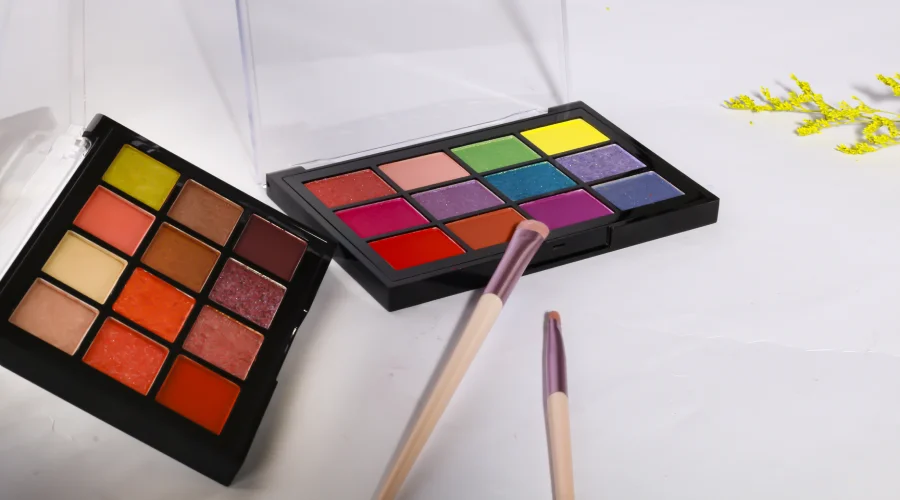
Conventional pressed and baked eyeshadows can both deliver matte, satin, shimmer, metallic, or other effects. The meaningful difference for a beauty brand is not that one format is always softer, brighter, or longer wearing. It is how the formulation and manufacturing route supports the intended appearance, pan design, packaging, sample criteria, and assortment story.
What “powder eyeshadow” means in this comparison
Here, powder eyeshadow refers to a conventional dry-processed pressed powder. Powder materials, pigments or effect materials, and binder are blended and processed, filled into a pan, and compacted. The exact formula and process control pickup, payoff, blendability, fallout, surface behavior, and cake strength.
Review the pressed powder formulation and pan performance guide for the relationship among binder, processing, compaction, pan, and package.
What baked eyeshadow means
Baked eyeshadow is produced through a wet or slurry-like starting route that is formed on a support and dried or baked into its final cake. Products often use a domed or raised appearance, and the process can support distinctive marbling and visual effects.
The word “baked” does not guarantee one finish or performance profile. Those properties still depend on the formula, pigments, effect materials, cake structure, and intended application.
Compare the two formats by development decision
| Decision | Conventional pressed | Baked |
|---|---|---|
| Visual identity | Flat or embossed pans, wide finish range, familiar palette architecture | Domed or dimensional presentation, potential for marbling and artisanal visual cues |
| Pan behavior | Compaction balance influences pickup and cake strength | Dried cake structure and support influence pickup and durability |
| Shade development | Each pigment/effect system may change pressing behavior | Each color/effect system may change drying appearance and cake behavior |
| Packaging | Broad range of standard pans, inserts, singles, and palettes | Clearance and support must suit the baked cake shape and dimensions |
| Assortment role | Flexible for core palettes, mattes, transitions, and effects | Useful when dimensional presentation or baked storytelling supports the concept |
Do not reduce the choice to intensity
A common claim is that baked eyeshadow is automatically more intense and conventional pressed eyeshadow is automatically softer. Either route can be adjusted through pigment level, effect material, binder, processing, application method, and shade design.
Write measurable or observable targets: dry pickup, one-pass payoff, blendability, finish, fallout, wet-use intent if applicable, and the desired visual result under agreed lighting.
Plan the package around the cake
Conventional pans may fit many standard inserts, while a baked dome or support can require different clearances and retention. Confirm pan or support dimensions, insert, lid clearance, closure, mirror, applicator, and transit protection.
A compact that fits an empty component may not adequately protect the filled cake. Use the powder makeup compact development guide before finalizing the structure and artwork.
Compare sample performance using one method
Review the formats with the intended applicator and a documented method. Depending on the brief, compare:
- pan or cake appearance;
- dry pickup and repeated pickup;
- payoff, opacity, blending, and finish;
- fallout, dusting, glazing, or surface change;
- shade consistency across the range;
- cake movement, edge damage, cracking, or breakage;
- package clearance and applicator access.
If wet application is part of the concept, evaluate it deliberately. Do not assume every conventional or baked formula is designed for wet use.
Use the assortment role to make the decision
A conventional pressed format may suit a broad core palette with mattes, transitions, liners, and effects. Baked shades may support a collection built around dimensional surfaces, marbling, luminosity, or a distinctive hero product. A mixed palette may be possible, but it adds pan, insert, clearance, formula, and assembly decisions.
For a full palette project, use the custom eyeshadow palette development guide to map shade roles and finish architecture.
Questions for a manufacturer
- Which format best supports the visual and performance brief?
- What sample references and approval method are needed?
- How do the planned shades affect process or cake behavior?
- Which pan, support, compact, and applicator options suit the format?
- Can both formats be combined in the proposed palette structure?
- Which project-specific quantity, testing, packaging, and timing variables must be confirmed?
Use the sample approval checklist to record formula, shade, pan, compact, and open items. When the product concept and format decision are clear, contact AKIACO to discuss sampling and manufacturing.
Frequently asked questions
What is the main difference between conventional pressed and baked eyeshadow?
The formats use different formulation and manufacturing routes, which can affect appearance, texture, pan shape, finish, and development requirements.
Is baked eyeshadow always more reflective?
No. Finish depends on the complete formula and effect-material system; either format can be developed in different finish directions.
Can pressed and baked shades be used in one palette?
Potentially, but pan geometry, insert design, filling or placement, protection, and shade performance must be planned together.
Which format is better for a private label brand?
The better option depends on the product brief, visual identity, target performance, packaging, order scope, budget, and development plan.
What should brands compare during sampling?
Compare shade and finish, pickup, payoff, blending, fallout, pan integrity, package fit, applicator behavior, and assortment role.