

Important: Non-comedogenic does not mean oil-free, acne-proof, or suitable for every skin type. It simply indicates that the formulation is designed to lower the risk of clogged pores.
How Does Makeup Cause Clogged Pores?
To understand non-comedogenic products, it helps to understand how comedones form.
Simplified Process
- Skin produces sebum (natural oil).
- Dead skin cells accumulate inside pores.
- Pore openings become blocked.
- Oil and debris become trapped.
- Blackheads, whiteheads, or acne lesions develop.
Certain cosmetic ingredients may increase this risk, especially when used in high concentrations or in heavy formulations.
Therefore, non-comedogenic makeup aims to reduce factors that contribute to pore blockage.
What Ingredients Are Commonly Avoided?
There is no universal banned ingredient list for non-comedogenic products. However, formulators often evaluate ingredients with a history of higher comedogenic potential.
Ingredients Sometimes Reviewed Carefully
- Isopropyl Myristate
- Isopropyl Palmitate
- Myristyl Myristate
- Laureth-4
- Cocoa Butter
- Coconut Oil (depending on concentration and formulation)
Commonly Used Alternatives
- Dimethicone
- Squalane
- Caprylic/Capric Triglyceride
- Lightweight esters
- Silica-based oil absorbers
Decision rule: Ingredient selection alone does not determine whether a product is non-comedogenic. The entire formulation, concentration levels, ingredient interactions, and finished-product testing matter more than a single ingredient list.
Which Types of Makeup Can Be Non-Comedogenic?
Nearly every makeup category can be formulated as non-comedogenic.
Foundation
Often the most requested category because it covers the largest skin surface area.
Preferred characteristics:
- Lightweight texture
- Breathable wear
- Oil-control properties
- Long-lasting performance
Concealer
Designed to provide coverage without creating heavy buildup around pores.
Powder Products
Examples include:
- Setting powder
- Pressed powder
- Powder foundation
These products often help absorb excess oil.
Primer
Non-comedogenic primers focus on:
- Smoothing skin texture
- Extending makeup wear
- Minimizing pore visibility
BB Cream and CC Cream
Modern formulations increasingly combine:
- Coverage
- Hydration
- Sun protection
- Non-comedogenic positioning
How Can Brands Evaluate Whether Makeup Is Non-Comedogenic?
Many new beauty brands assume that avoiding a few ingredients is enough. In reality, professional evaluation requires a broader approach.
Assessment Framework
1. Formula Review
Evaluate:
- Raw material profiles
- Comedogenicity data
- Oil phase composition
- Product texture
2. Stability Testing
Ensure ingredient compatibility and long-term performance.
3. Safety Assessment
Verify regulatory compliance and product safety.
4. Human Testing
Where applicable, conduct dermatological or non-comedogenic testing to support marketing claims.
Practical Decision Logic
Is Non-Comedogenic Makeup Good for All Skin Types?
Acne-Prone Skin
Usually the primary target audience.
Oily Skin
Frequently benefits from lightweight, oil-controlling formulas.
Combination Skin
Often responds well to balanced formulations.
Sensitive Skin
May benefit, but non-comedogenic does not automatically mean hypoallergenic.
Dry Skin
Can also use non-comedogenic makeup, provided adequate moisturizing ingredients are included.
Decision rule: Choose products based on both skin condition and skin type. Acne-prone dry skin requires a different formulation strategy than acne-prone oily skin.
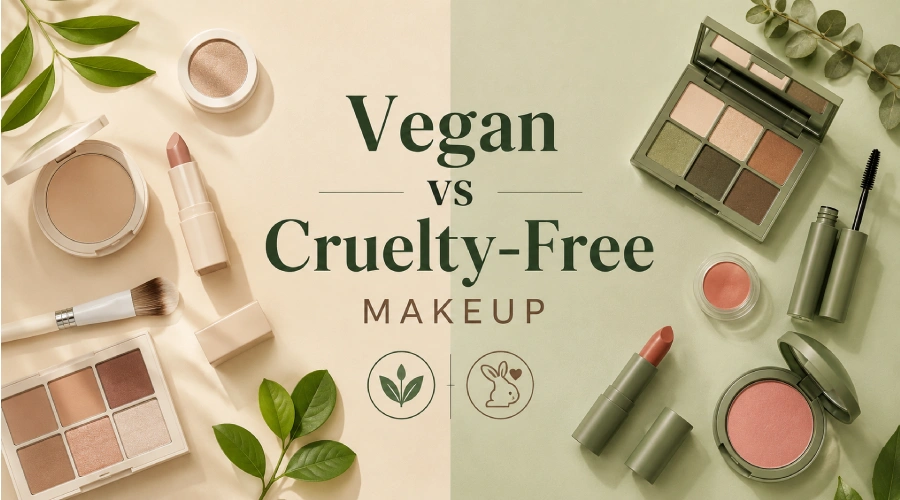
Read More >> Vegan vs Cruelty-Free Makeup: What’s the Difference?
Common Misconceptions
Myth 1: Non-Comedogenic Means Oil-Free
False.
Many non-comedogenic products contain carefully selected oils and emollients.
Myth 2: Non-Comedogenic Products Cannot Cause Acne
False.
Hormones, skincare routines, diet, and individual sensitivities can all contribute to breakouts.
Myth 3: Natural Ingredients Are Always Better
False.
Some natural oils have higher comedogenic potential than certain synthetic alternatives.
Myth 4: One Ingredient Determines Everything
False.
Formulation architecture is more important than any single ingredient.
Why Is Demand for Non-Comedogenic Makeup Growing?
Consumer purchasing behavior increasingly favors products that combine makeup performance with skin-conscious benefits.

Popular claim combinations include:
- Non-comedogenic
- Dermatologist-tested
- Oil-free
- Lightweight
- Long-wearing
- Suitable for acne-prone skin
For beauty brands, these claims can help address growing demand from consumers seeking complexion products that support everyday skin health.
Private Label Non-Comedogenic Makeup Development
When developing a private label non-comedogenic makeup line, brands typically focus on:
- Target skin type definition
- Ingredient selection
- Texture optimization
- Performance testing
- Claim substantiation
- Packaging compatibility
An experienced manufacturing partner can help brands accelerate development while maintaining quality and compliance standards.

Guangdong AKIA Cosmetic Co., Ltd. supports private label and OEM/ODM makeup development with over 40 years of manufacturing experience, a 40,000-square-meter production facility in Foshan, China, low MOQs, and efficient lead times, making it suitable for both emerging beauty startups and established cosmetic brands.
Conclusion
Non-comedogenic makeup is formulated to reduce the likelihood of clogged pores, making it a popular choice for acne-prone and oily skin consumers. The most reliable way to evaluate a non-comedogenic product is not by looking at a single ingredient but by assessing the complete formulation, testing strategy, and intended user profile.
For beauty brands developing private label makeup, combining thoughtful ingredient selection, performance testing, and claim validation is the most effective approach to creating credible non-comedogenic products that meet modern consumer expectations.
Read More >> How to Launch a Makeup Brand with Low MOQ Step by Step