
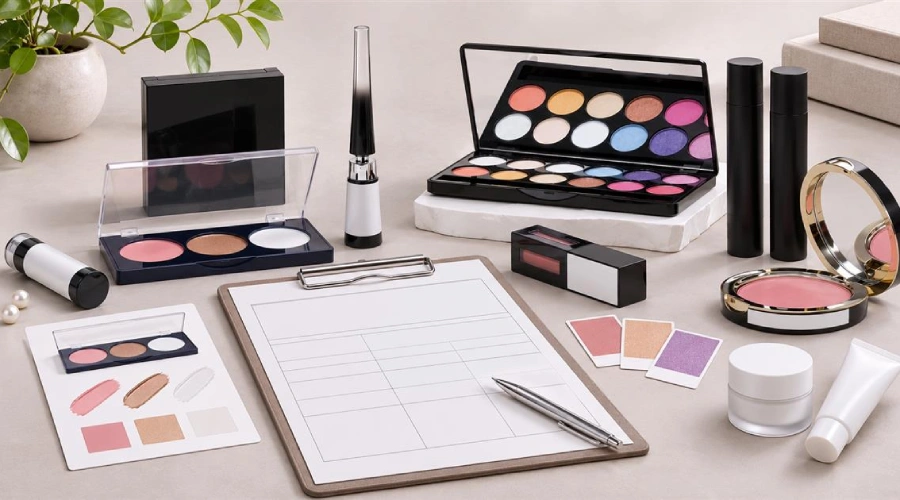
A cosmetic product specification sheet gives a beauty brand and its manufacturing partners one controlled definition of the product that has been approved. It connects the formula or product reference, shades, components, artwork, assembly, inspection points, and authorized changes.
This is different from an early development brief. A brief explains what the brand wants to create. A finished-product specification records what the project team has agreed to make after development and sample review.
Why a finished-product specification matters
Cosmetic projects contain many linked decisions. A lipstick may have an approved shade but the wrong case. A powder may use the right compact but an outdated pan layout. A repeat order may use revised artwork without a clear record of which version replaced the previous file.
A controlled specification helps the team answer five practical questions:
- What exact product and SKU are being ordered?
- Which sample, component, and artwork versions are approved?
- What should be checked before the order is accepted?
- Which open items still require a decision?
- How will later changes be authorized and recorded?
Start with a clear color cosmetics product brief, then convert approved development decisions into a controlled production record.
1. Identify the product, project, and specification status
The first section should prevent teams from confusing similar products or revisions. Record the project name, product category, internal product code, SKU or shade code, intended markets, brand owner, manufacturer contact, revision number, status, issue date, and approval owners.
Use clear status language such as draft, under review, approved, superseded, or on hold. Do not allow several uncontrolled files to circulate as “final.”
2. Define the approved product reference
Record the formula, bulk, or product reference used by the project. Link it to the approved sample and state what that sample controls. Depending on the product, the reference may represent shade, finish, texture, pickup, glide, application, appearance, or another agreed characteristic.
A physical sample should not be expected to answer every question by itself. Identify its code, preparation date where known, storage location, approval date, and any limitations. If separate references control appearance, packaging, and artwork, list each one.
The makeup sample approval checklist can help close open decisions before they are transferred into the specification.
3. Control shades, finishes, and SKU differences
For every SKU, identify the shade name, shade code, finish, and approved reference. Record whether the range uses one common base with variants or several distinct product references. A range table is often easier to manage than separate notes in email.
| SKU field | Example of what to control |
|---|---|
| Identity | Product, shade name, and internal shade code |
| Visual direction | Finish, opacity or payoff target, and approved reference |
| Component | Pan, bottle, tube, compact, cap, applicator, or insert code |
| Artwork | SKU-specific file, barcode, language, and revision |
| Order allocation | Approved quantity split by SKU |
4. Specify the packaging system
List every primary and secondary component needed to create the finished unit. This can include a pan, compact, bottle, wiper, applicator, cap, label, carton, insert, tray, seal, leaflet, or accessory. Use supplier or project codes where they are controlled.
Record material, color, finish, decoration, dimensions or fit references where appropriate, and the approved component sample. Keep formula-to-package evaluation separate from visual approval. The cosmetic packaging compatibility testing guide explains why a visually approved component may still require product-specific evaluation.
5. Link the correct artwork and labeling records
The specification should identify the exact approved artwork revision for each component and SKU. Record the dieline or component reference, filename, language, barcode, decoration method, variable data, and approval status.
This record does not replace market-specific legal review. It shows which reviewed file is authorized for the order. Use the cosmetic packaging artwork approval checklist before releasing files for printing or decoration.
6. Define filling, assembly, and finished-unit configuration
Describe how the approved components become the finished saleable unit. Relevant fields can include fill or net-content reference, pan placement, applicator insertion, closure, label position, carton orientation, accessory inclusion, and shipper configuration.
Only include exact operating values or tolerances when they have been agreed and supported by the responsible technical team. A generic blog or an old project should not be used to invent production settings for a new item.
7. Turn subjective expectations into reviewable inspection points
A useful specification identifies what will be examined and how the decision will be made. Avoid vague requirements such as “perfect color” or “premium packaging.” Instead, name the characteristic, approved reference, review condition, method, responsibility, and disposition route.
- product and shade identification;
- visible appearance and finish against the approved reference;
- component identity and assembly;
- artwork version and variable SKU data;
- fill or net-content checks where applicable;
- packaging function and presentation checks agreed for the project;
- lot, code, and record requirements.
Acceptance criteria should come from the approved project and responsible quality or technical team. Do not copy tolerances from another product without confirming that they apply.
8. Record open items, deviations, and release responsibility
A specification should not hide unresolved work. Include an open-item log with the issue, owner, due decision, affected SKU, and release impact. If a deviation is accepted, record who authorized it, its scope, and whether it applies only to one order or changes the ongoing specification.
9. Use controlled change management
Changes to formula reference, shade, component, artwork, supplier, assembly, inspection, or market configuration can affect other parts of the product. Use a change record that explains the reason, affected documents and SKUs, required re-evaluation, approvers, effective order, and superseded version.
For repeat orders, compare the current specification with the previous approved version before confirming production. Keep the approved reference, review conditions, records, and change history together so the next order does not depend on memory.
Minimum specification-sheet structure
- Document identity, revision, status, and approvers
- Product, project, market, SKU, and shade identification
- Formula or product reference and approved samples
- Packaging components and approved physical references
- Artwork, labeling, barcode, and decoration revisions
- Finished-unit configuration and order allocation
- Inspection characteristics, methods, references, and responsibility
- Open items, deviations, and release status
- Change history and superseded records
What to send when discussing a project
When approaching a manufacturer, send the current brief or specification status, product format, shade count, target markets, packaging route, artwork status, order scope, approved references, and open questions. This gives both sides a clearer starting point than a product image alone.
If your project has moved beyond an initial concept and needs a controlled path toward production, contact AKIACO with the product type, intended markets, SKU plan, packaging status, and available sample or specification records.
Frequently asked questions
What is a cosmetic product specification sheet?
It is a controlled record defining the approved product, packaging, artwork, inspection points, references, and change status for production and repeat orders.
Is a product specification the same as a product brief?
No. A brief describes the development target, while the finished-product specification records what has been approved for production.
Should the approved sample be referenced in the specification?
Yes. Record the approved sample or other controlled reference and explain which decisions it represents.
Does one specification cover every shade and market?
Only when all variable details are controlled. Shade, artwork, barcode, language, ingredient, and market differences may require linked SKU records.
When should a cosmetic specification be updated?
Update it through controlled change management whenever an approved product, component, artwork, method, reference, or acceptance requirement changes.